The biggest first-order mistakes with custom leather patches are low-contrast leather and method pairings, patches sized for a flat screen instead of a curved hat, backings that do not suit the blank, and proofs approved too quickly. Customized Leather Patches helps you catch each one with a free mockup within 24 hours and unlimited free revisions before production starts.
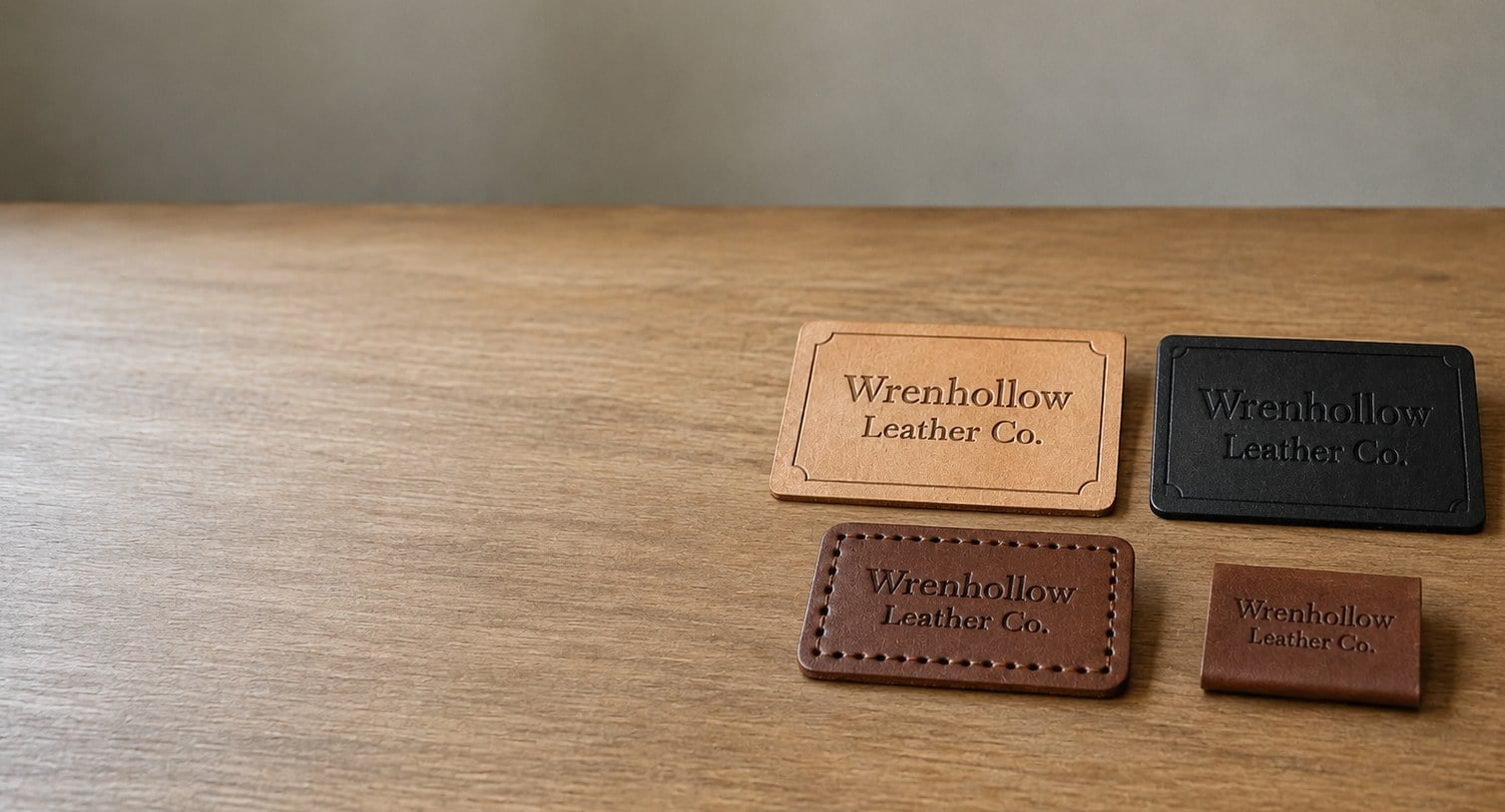
- Choose the leather tone and decoration method together so the logo has enough contrast.
- Size the patch against the real blank, not a flat template.
- Match the backing to the blank and to whoever will attach the patches.
- Free mockup within 24 hours, unlimited free revisions, and you pay nothing until you approve.
- Standard turnaround is about 2 weeks after approval, with faster turnaround available with express shipping.
What are the most common mistakes on a first custom leather patch order?
The most common mistakes on a first custom leather patch order are choosing a leather tone that hides the logo, sizing the patch for a flat mockup instead of a curved hat crown, picking a backing that does not suit the blank, and skipping a careful read of the proof. Most of these problems are easy to prevent once you know to look for them, and none of them require a bigger budget to fix.
A first order goes wrong for a simple reason: a leather patch looks finished on screen long before it is finished on a hat. The mockup from Customized Leather Patches shows the artwork, the leather and the method together, but you still have to picture it on the real blank, in real light, at arm’s length. Buyers who treat the proof as a formality are the ones who end up with patches that read poorly or sit awkwardly.
The sections below walk through each mistake in the order it usually happens, from choosing the leather to attaching the last patch, with a short fix for each one.
Why does my logo disappear on the leather tone I picked?
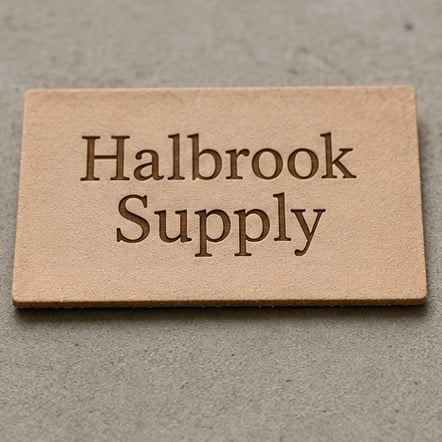
A logo disappears on a leather patch when the decoration method and the leather tone do not create enough contrast. Debossing and laser engraving do not add ink; they press or burn the design into the surface, so the result depends on how much the leather darkens or changes texture. A light, natural tone shows engraving clearly, while a very dark tone can swallow a fine debossed mark.
The fix is to choose the leather and the method together rather than one at a time. If your brand needs a dark patch, ask whether foil stamping or a printed finish will carry the logo better. If you love the look of engraving, pick a tone where the burn reads as a clear contrast. The debossed leather patches and engraved leather patches pages show how each method behaves.
- Engraving: strongest on lighter natural tones.
- Debossing: a subtle, tonal look that relies on texture and shadow.
- Foil stamping: adds metallic color, so it stays visible on dark leather.
How do I avoid ordering leather patches in the wrong size?
Avoid ordering leather patches in the wrong size by measuring the actual front panel of the hat, bag or jacket you plan to use, not a generic template. A patch that looks balanced on a flat mockup can wrap awkwardly over a curved crown, cover a seam or crowd the brim. Structured caps, unstructured dad hats, beanies and tote bags each leave a different flat area for the patch.
Hold a paper cutout of the proposed patch shape against the real blank before you approve the mockup. Look at it from a few steps back, the way people will see it in a store or on a job site. Check that the smallest text is still readable at that distance, and that the shape follows the item rather than fighting it.
If one order covers several blank types, it is common to need more than one patch size. Tell Customized Leather Patches which items each patch will go on so the mockup can reflect that, instead of forcing one size onto everything.
Which backing mistakes cause leather patches to peel or pucker?
Backing mistakes cause most early peeling and puckering on leather patches. A heat-seal backing needs a blank that can take heat and pressure, a fairly flat surface, and the right press settings. A sew-on backing needs a garment that a needle can pass through cleanly. Choosing the backing before you know the blank is the quickest way to end up with patches that will not stay put.
Match the backing to the item and to who will attach it. If a local decorator with a heat press is applying the patches to cotton or polyester caps, heat-seal is usually efficient. If the patches go on thick canvas, heavy workwear or items that will be washed often, sewing adds security. The heat-seal backed patches and sew-on leather patches pages explain each option.
| Mistake | What happens | Fix |
|---|---|---|
| Heat-seal on heat-sensitive fabric | Scorching or a weak bond | Choose sew-on or test one blank first |
| Heat-seal on a deeply curved crown | Edges lift over time | Use a hat press form or add stitching |
| Sew-on with no one to sew | Patches sit in a box | Line up a decorator before ordering |
What should I check on the leather patch mockup before approving it?
Check four things on every leather patch mockup before approving it: the spelling of every word, the leather tone, the decoration method, and the patch size and shape. Customized Leather Patches returns a free mockup within 24 hours and offers unlimited free revisions, so there is no reason to approve a proof you are unsure about. You pay nothing until you approve the design.
Read the proof out loud, letter by letter, including any tagline, location or website. Typos in small text are the single most painful mistake to discover after production, because every patch in the run carries it. Then zoom out and judge the overall look: does the logo read at a glance, and does the border or edge treatment suit your brand?
- Confirm the spelling, punctuation and capitalization.
- Confirm the leather type and tone match what you asked for.
- Confirm the method: debossed, engraved, foil-stamped or printed.
- Confirm the size, shape and backing.
- Ask a second person to review before you approve.
Why do first-time buyers run out of time on leather patch orders?
First-time buyers run out of time on leather patch orders because they plan for production but forget the stages around it. Standard turnaround at Customized Leather Patches is about 2 weeks after mockup approval, with faster turnaround available with express shipping. The time that catches people is everything else: getting artwork ready, waiting on internal sign-off, sourcing blanks and attaching the patches.
Attaching is the stage most often left off the calendar. Patches arrive as finished pieces, and someone still has to sew or press each one onto a hat, jacket or bag. If that work goes to an outside decorator, their schedule matters too. Build it into your plan from the start rather than treating it as an afternoon job.
Approval delays are the other quiet problem. When several people need to sign off on the mockup, gather their feedback in one round. Each extra round of changes is free, but each one also moves your ship date.
How do mismatched blanks ruin an otherwise good leather patch order?
Mismatched blanks ruin an otherwise good leather patch order when the patches arrive before anyone has chosen or tested the items they go on. A patch designed for a structured cap may look lost on a slouchy beanie, and a leather tone that pairs well with a khaki hat can clash with a navy one. The patch is only half of the finished product.
Decide on the blank styles and colors before you finalize the patch, and share them with Customized Leather Patches when you request a quote. If you plan to put the same patch on several colors of hat, look at the leather tone against each of them. Some buyers order two tones in one project so that every blank color has a good pairing.
It also helps to order a few spare blanks. Application mistakes happen, especially with heat-seal patches on a press for the first time, and a spare hat is easier to find before the event than during it.
What details should I put in my first leather patch quote request?
Put the item the patches will go on, the quantity, the in-hands date, your preferred leather and method, the backing, and your best logo file in your first leather patch quote request. The more of these details Customized Leather Patches has at the start, the closer the first mockup will be to what you need, and the fewer revision rounds you will spend on basics.
Mention anything unusual in the notes field: a custom shape, a second logo for part of the run, patches for several blank colors, or a deadline tied to an event. If you are unsure which leather or method suits your logo, say so and ask for a recommendation. That is far better than guessing and approving something that does not suit the brand.
When you are ready, use the custom quote form and review how it works so you know what to expect at each step.
Frequently asked questions
Is it a mistake to approve a leather patch mockup on my phone?
Approving a leather patch mockup on a phone is risky because small text and fine edges are hard to judge on a small screen. Open the proof on a larger display, zoom into every line of text, and print it at actual size if you can. Customized Leather Patches offers unlimited free revisions, so take the time to review the proof properly before you approve it.
What happens if I find a typo after my leather patches are produced?
Leather patches with a typo cannot be corrected after production, because the text is pressed, engraved or stamped into every piece. The only fix is a new run with corrected artwork. That is why the mockup stage matters so much. Read every word aloud, ask a coworker to check it, and confirm names, taglines and websites before approving the design with Customized Leather Patches.
Can I send a screenshot of my logo for a leather patch order?
A screenshot of a logo can start a leather patch conversation, but it often lacks the sharp edges a clean deboss or engraving needs. Vector files such as AI, EPS, PDF or SVG give the best results. If a screenshot is all you have, send it anyway and explain that it is the only file available, so the mockup can show how it will look.
Should I test one leather patch on a hat before attaching the whole batch?
Testing one leather patch on a single hat before attaching the full batch is a smart habit, especially with heat-seal backing. A test shows whether the press settings, placement and blank material all work together. If the edges lift or the fabric scorches, you can adjust before the rest of the patches are committed. Keep a few spare blanks on hand for this step.
Why does my leather patch look darker than the mockup?
A leather patch can look darker than its mockup because screens show color with light, while real leather absorbs it and varies naturally from hide to hide. Engraving and debossing also change the surface tone. Ask about the tone you selected if you are unsure, and judge the finished patch in daylight. Customized Leather Patches can describe how each leather tone usually reads in person.
Is it a mistake to put too much text on a leather patch?
Putting too much text on a leather patch is a frequent first-order mistake. Long taglines, addresses and fine print crowd the design and become hard to read once pressed into leather. Keep the patch to a logo and one short line where possible. If you need more information on the product, a separate leather brand tag or label can carry it without cluttering the main patch.
What is the risk of choosing a leather patch shape that fights the logo?
A leather patch shape that fights the logo leaves awkward empty corners or squeezes the artwork toward the edges. A round logo usually suits a circle, and a wide wordmark usually suits a rectangle or rounded rectangle. Customized Leather Patches can suggest a shape in the free mockup, and you can request alternate shapes in revisions before deciding which one to approve.
Do I need to tell the supplier who will attach my leather patches?
Telling the supplier who will attach your leather patches helps avoid a backing that nobody can apply. If a decorator with a heat press will handle the job, heat-seal backing often makes sense. If a tailor or in-house team will sew them, a sew-on backing is the better fit. Customized Leather Patches can recommend a backing once it knows who is doing the attaching.
Can mixing leather tones in one order cause problems?
Mixing leather tones in one leather patch order works well when each tone is assigned to a specific blank color, but it causes confusion when the split is unclear. List exactly how many leather patches you need in each tone and which items they go on. Customized Leather Patches can show each tone in the mockup so you can approve every combination before production starts.
Is waiting until the final week the biggest timing mistake for leather patches?
Waiting until the final week is one of the biggest timing mistakes for leather patches, because standard turnaround is about 2 weeks after mockup approval. Faster turnaround is available with express shipping, but attaching patches and delivering finished gear still take time. Customized Leather Patches can review your date when you request a quote, so share the in-hands date up front.
Should first-time buyers order leather patches before choosing the hats?
First-time buyers should usually choose their hats or other blanks before finalizing leather patches. The blank decides the right patch size, shape, leather tone and backing. Ordering patches first can leave you hunting for hats that suit them. Share the blank style and color with Customized Leather Patches so the mockup shows a patch designed for the item it will actually go on.
How can I avoid a leather patch that looks cheap on premium gear?
A leather patch looks cheap on premium gear when the material, method and edge finish do not match the quality of the item. Pair premium blanks with a leather and decoration method that suit them, such as a clean deboss or a restrained foil accent. Avoid cramming in extra elements. Request two or three options in the mockup and compare them side by side before you approve.
Get a free mockup for your leather patches
Send your logo or idea and the quantity you have in mind. Customized Leather Patches returns a free mockup within 24 hours, you approve the design before anything is produced, and standard turnaround is about two weeks with faster options available. Get a custom quote.