A leather patch is often the part of a cap or jacket people notice first, and it is also the part most likely to be tested by weather, sweat, and the laundry. How long it lasts depends less on luck than on two things you control: what the patch is made of, and how the finished item is washed and stored. This guide explains what actually wears out on a leather patch, how genuine and faux materials age differently, and the handling routine that keeps a patch looking sharp for years rather than months.
What actually fails first
On a well-made patch, the leather itself is rarely the first thing to go. Genuine leather is tough against tearing and puncture, and a laser-engraved mark is burned into the surface rather than printed on top, so the logo does not simply rub off. The common failure points are instead the attachment and, on synthetic patches, the surface layer. Heat-seal adhesive can soften or let go if the item is exposed to high heat, which is why a patch that survives normal wear can still peel in a hot dryer. On faux or PU patches, the synthetic top coat is the weak point, and after a few years of heavy use it can crack, cloud, or start to delaminate from its backing.
Attachment method sets the durability ceiling. Heat-seal alone is convenient and clean-looking, but it depends entirely on the adhesive bond holding. Stitching, whether on its own or over a heat-sealed patch, gives a mechanical hold that does not care about temperature, so a sewn or sew-and-seal patch is the more forgiving choice for anything that will be laundered often or worn hard. If longevity is the priority, specifying stitching is usually worth it.
Genuine versus faux: two different aging stories
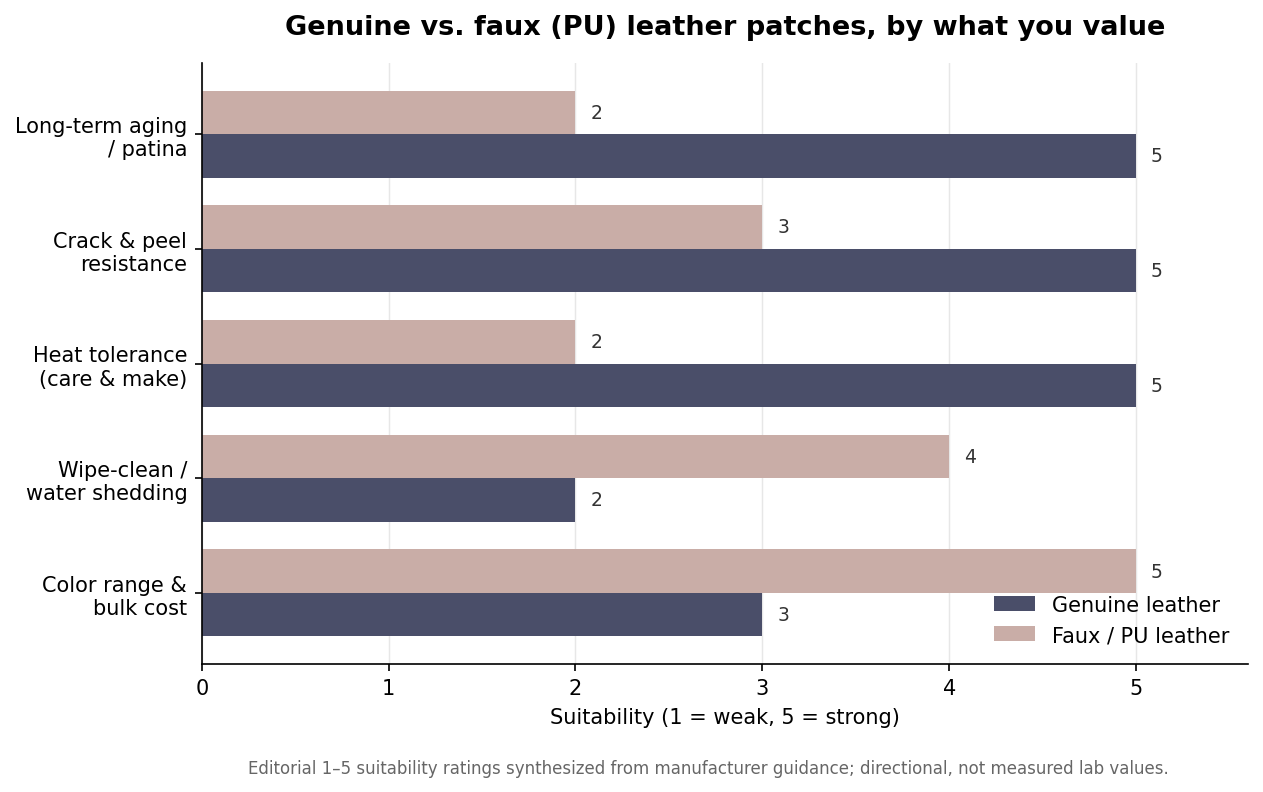
Genuine and faux leather do not just differ in feel; they age along completely different paths, and the right pick depends on what you want from the patch over time. Genuine leather develops a patina, darkening and taking on a soft sheen as it is handled, so it tends to look better with age and wears in rather than wearing out. Its trade-off is that it absorbs moisture and can hold water if it gets soaked, which is why drying matters. It also tolerates heat well, which is what allows it to be laser-engraved to a crisp, dark mark in the first place.
Faux or PU leather flips those properties. Its plastic surface sheds water and wipes clean easily, and it comes in a wider color range at lower cost per unit, which makes it attractive for large event runs and bright multi-color designs. But it does not build a patina, can start to look plastic over time, and is heat-sensitive, so it can warp or scorch if a press or iron runs too hot, and it is the material more prone to cracking and peeling after years of use. Neither is simply better; a heritage brand on a jacket meant to last leans genuine, while a thousand giveaway caps in six colors may be a better fit for faux.
The washing routine that keeps a patch intact
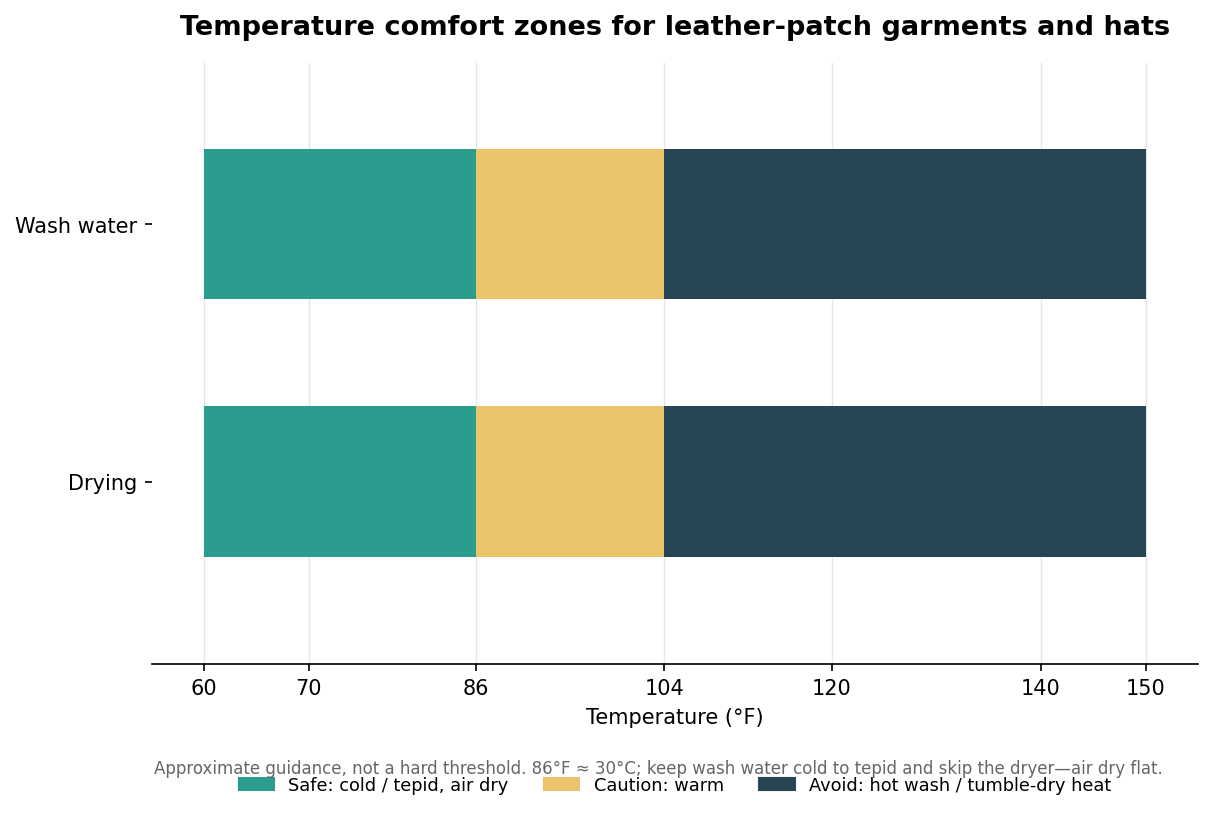
Most premature patch damage happens in the wash and the dryer, not on the body. The safe routine is consistent across garments and hats. Wash in cold to tepid water, roughly up to about 86°F, which is around 30°C, and never hot. Turn the item inside out and use a gentle cycle if you machine wash, or wash by hand, which is gentler still. Skip bleach, strong detergents, and fabric softeners, and do not soak or submerge the patch, since prolonged water contact is hardest on genuine leather.
Drying is where the dryer earns its reputation as the enemy of leather patches. The heat of a tumble dryer both stresses the leather and can loosen heat-seal adhesive, so air drying is the rule. Lay the item flat rather than hanging it, because a wet, heavy patch can pull a garment out of shape as it dries. If a patch stiffens or dries out over time, a small amount of leather conditioner restores suppleness. When something must be pressed, iron the inside of the garment gently and keep direct heat off the patch face. These are approximate comfort zones rather than exact thresholds, but staying inside them is what separates a patch that lasts from one that fails early.
Specifying for a long life from the start
Durability is easier to build in at the order stage than to recover later. If the finished product will be laundered regularly, ask for stitched attachment rather than heat-seal alone, and choose genuine leather when the item is meant to be kept and to age gracefully. Reserve faux for high-volume, budget, or bright-color runs where a few years of service is acceptable and easy cleaning matters more than patina. It also helps to keep engraved detail bold rather than hair-thin, because fine lines that look crisp on day one are the first to blur as leather softens and darkens with handling.
Finally, pass the care information along with the product. Most patch failures traced back to washing come from a hot cycle or a trip through the dryer that a simple care note would have prevented. A short tag or insert telling the wearer to wash cold, avoid the dryer, and air dry flat costs almost nothing and does more for the lifespan of a leather patch than any single material upgrade. Treated that way, a good genuine-leather patch comfortably outlives the trend that inspired it, and even a faux patch delivers its full useful run.